
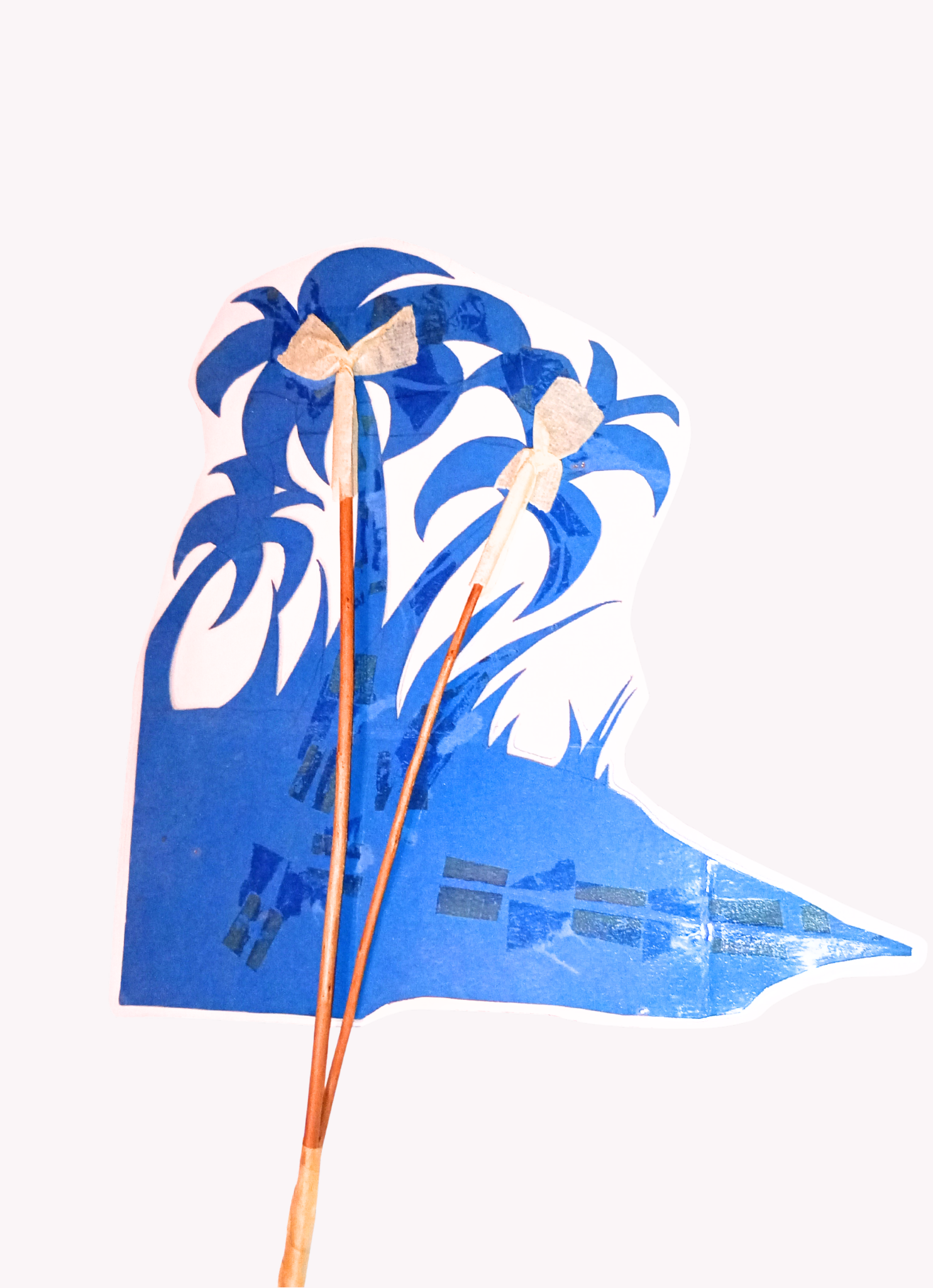
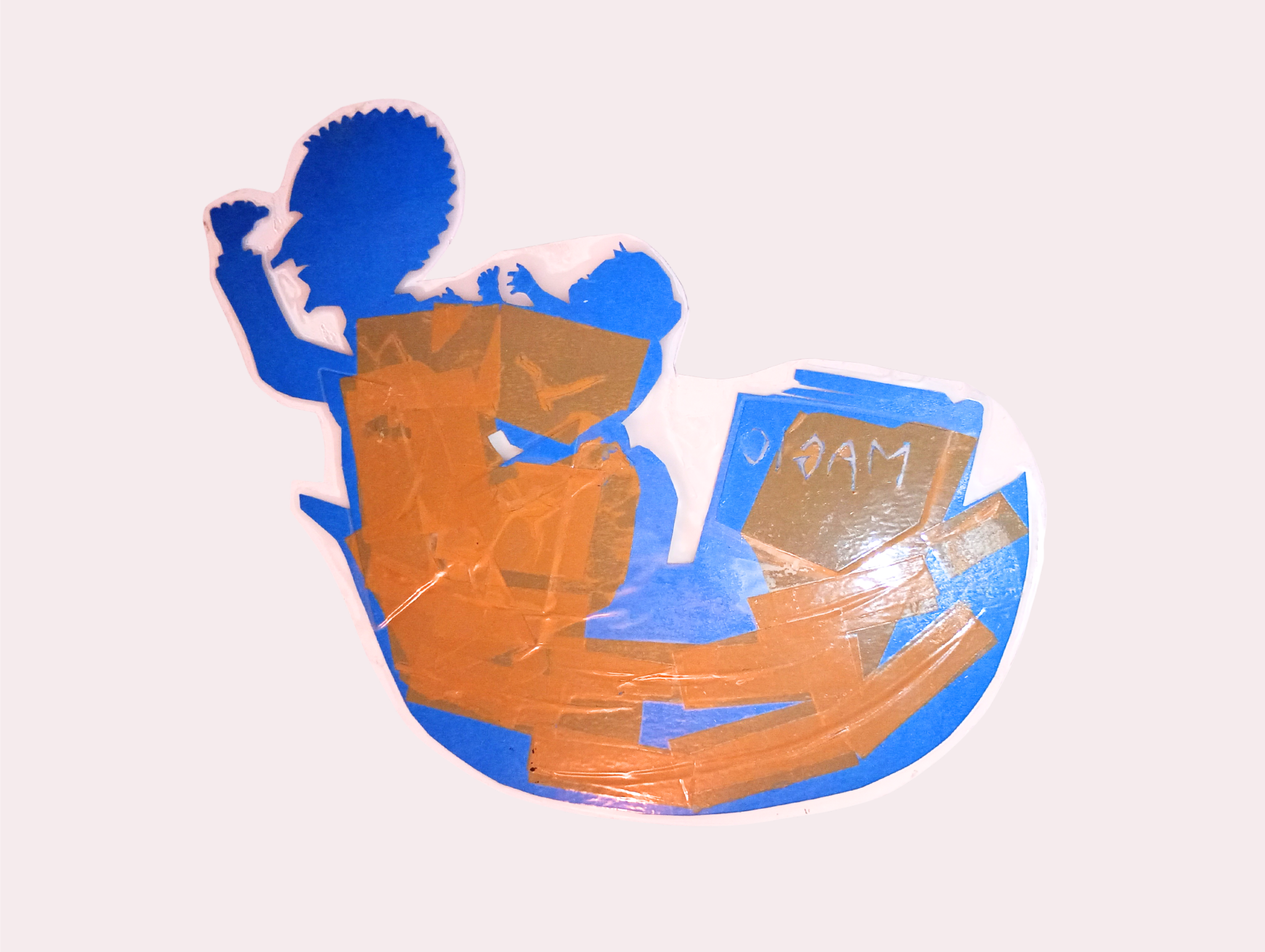
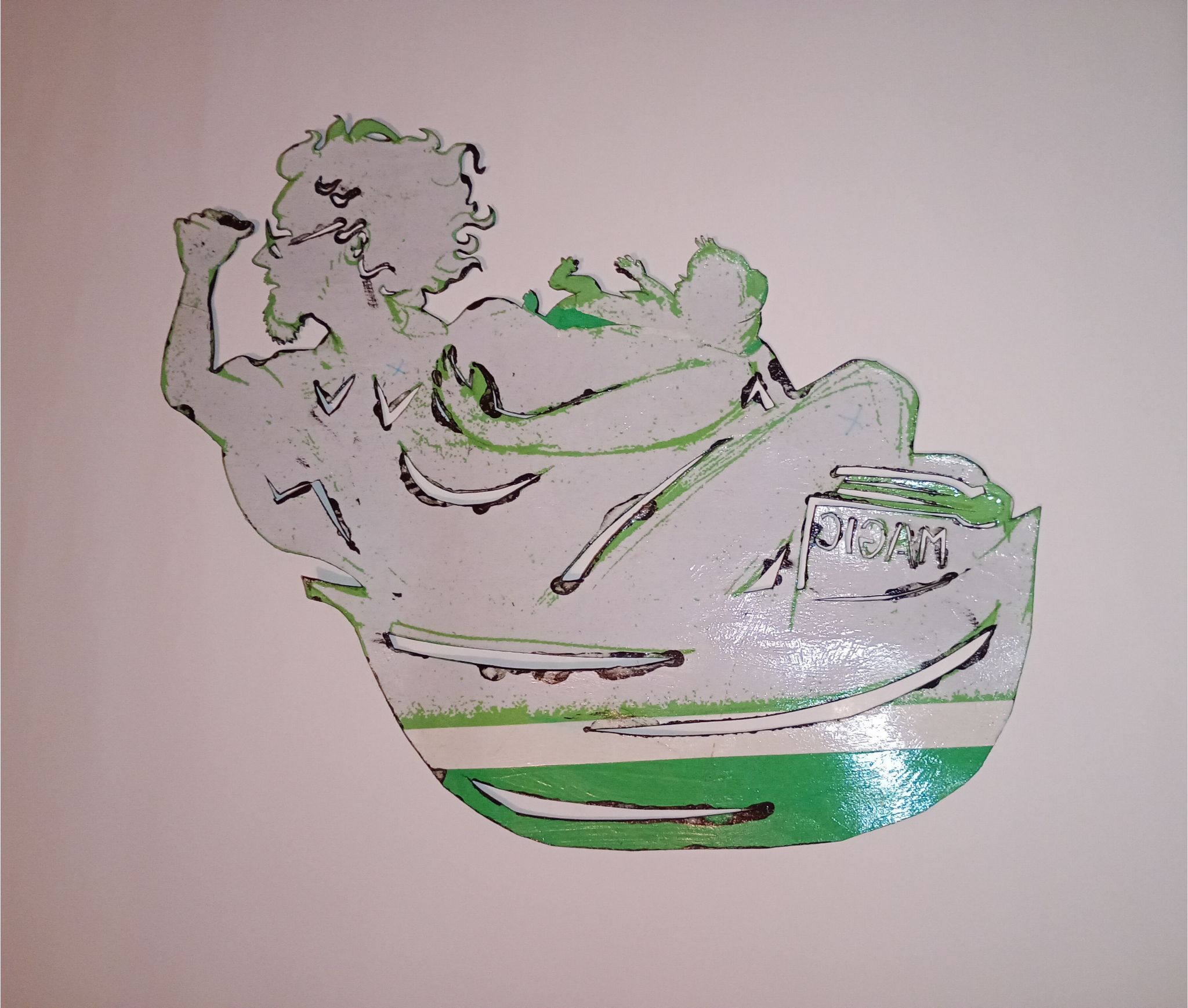
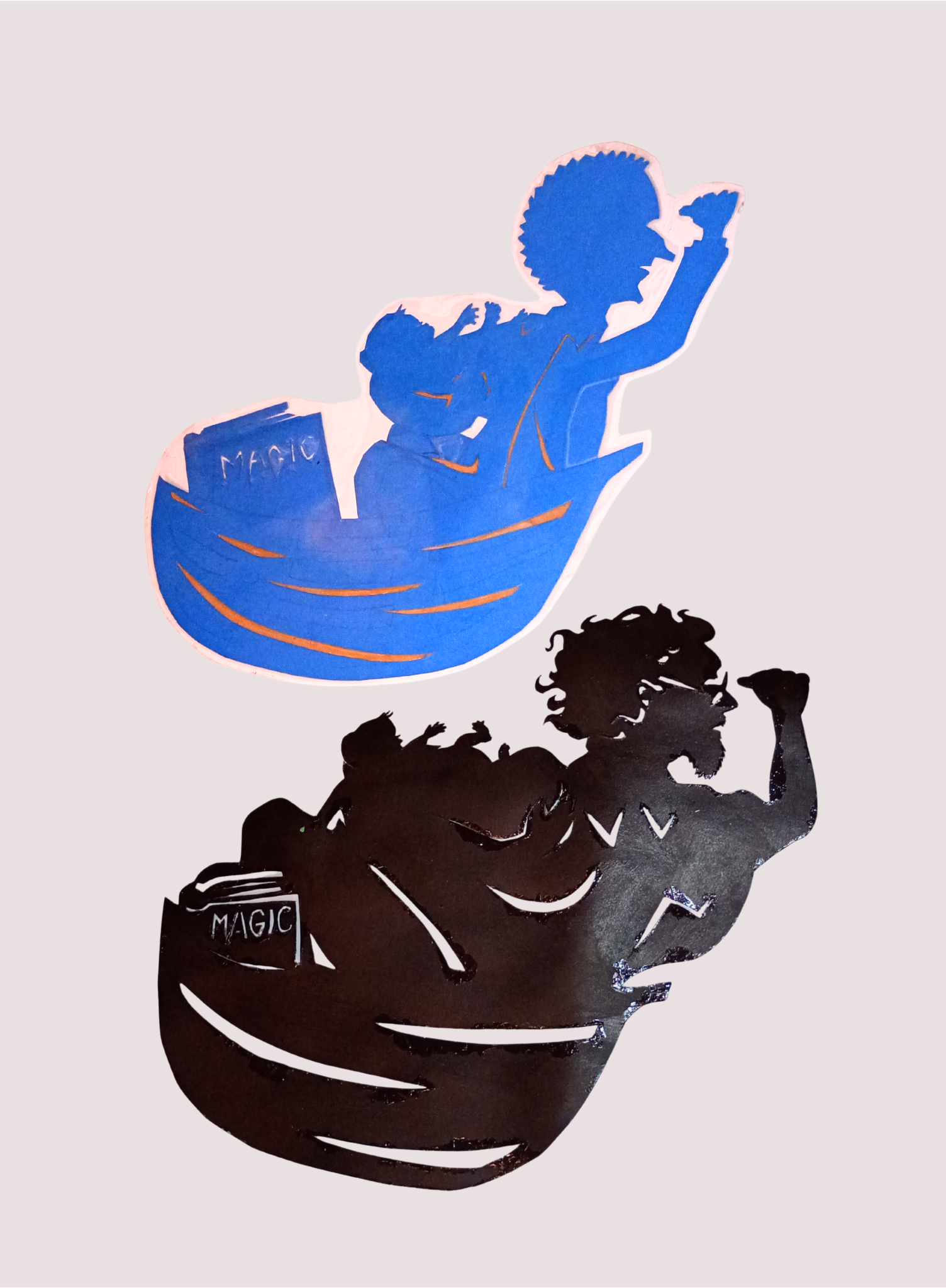
As I mentioned in my previous post, the New Year is a good time to take stock, pause and reflect on your practice. While sorting my workspace recently, I came across some shadow puppets that I used for the British Puppet Guild Show & Tell event last year. These were from our very first Rough Magic Theatre show, The Tempest, based on William Shakespeare’s play.
Looking back at these early puppets is fascinating, because they clearly show the development of my practice. I’m still very proud of them — they worked extremely well for that show and for the way we were working at the time — but I can also see how much I’ve learned since then.
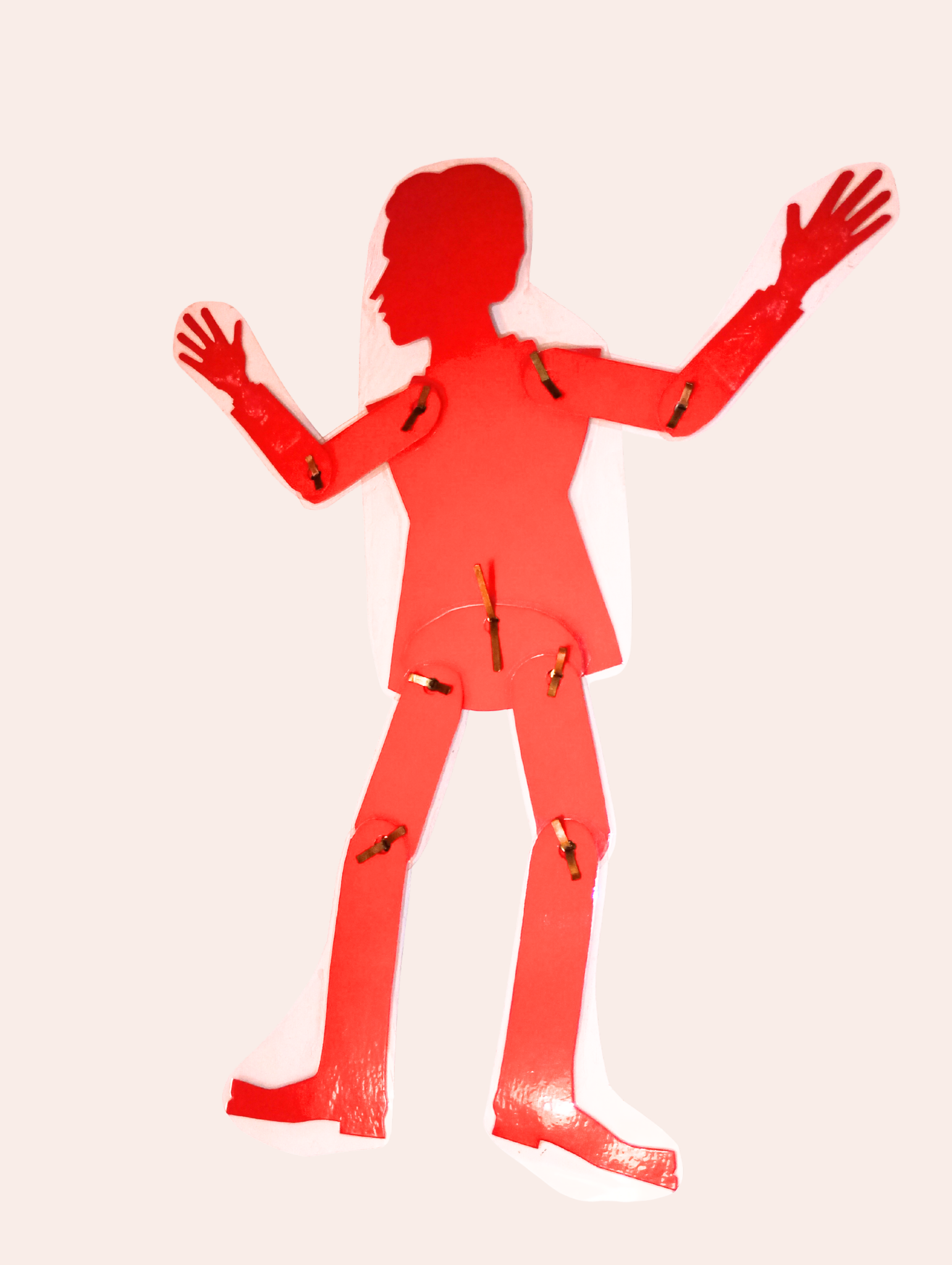
The process of making and using these puppets taught me a great deal: what reads clearly in silhouette, what works less well, and how different materials or jointing can have a big impact once a puppet is in performance.
As I often say in my shadow puppet making workshops, one of the great advantages of puppets over human actors is that the puppet is the character. It doesn’t need to adapt an existing appearance to fit a role — it can look like anything you imagine and do things that are impossible in real life.
Shadow puppetry adds a particular sense of magic to storytelling, and considering that The Tempest is a play filled with magical characters and events, it felt like a natural fit. That same quality is something I continue to explore in newer work, including our current show Fairytales of Wit, Wisdom & Witchcraft, which is booking from late Spring this year.
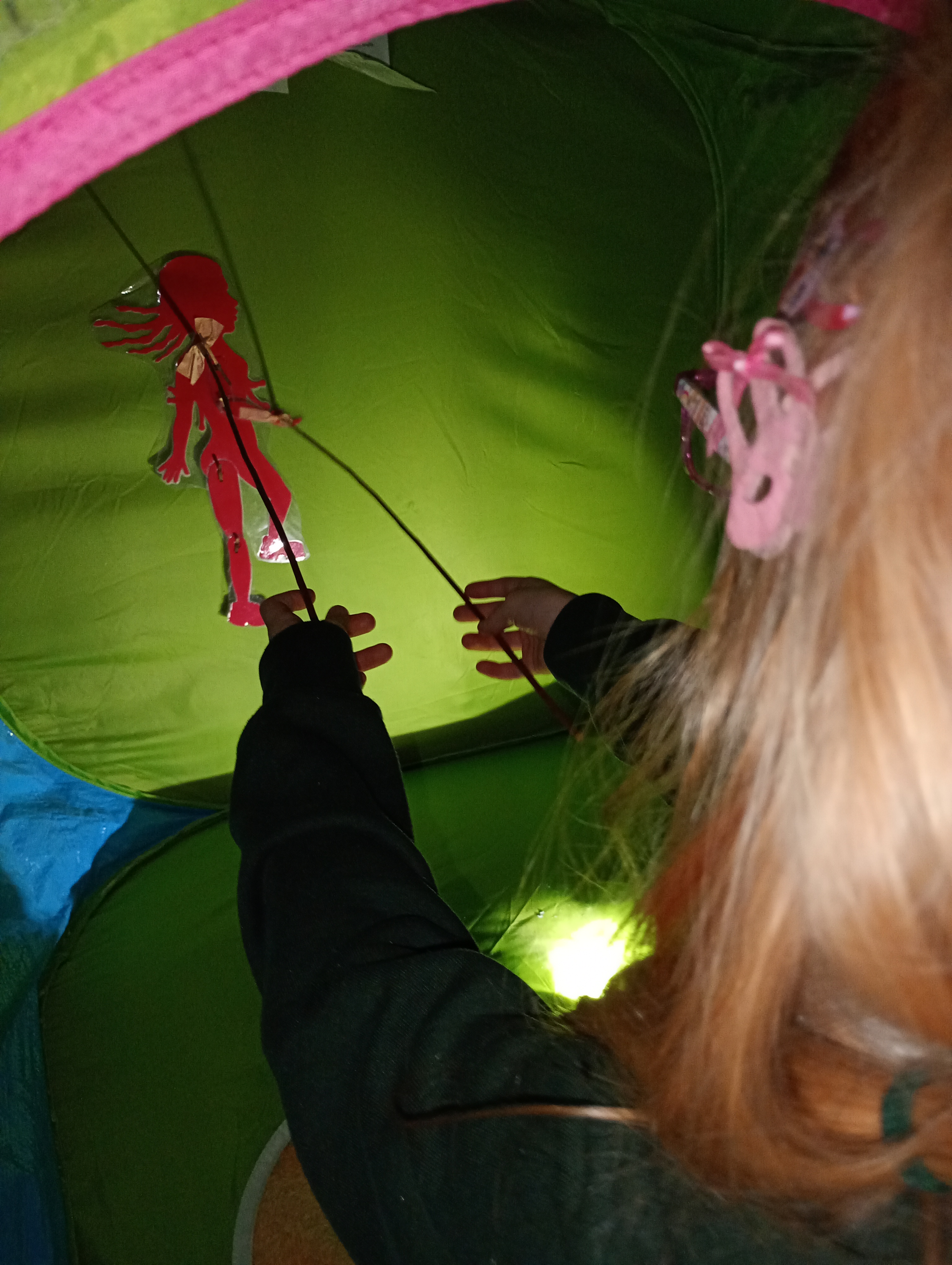
You can also see in the video below how different the puppets feel in performance compared with the inanimate, behind-the-scenes view. From the audience’s perspective, it isn’t the puppets themselves that are seen, but light and shadow on the screen.
Shadow images can be made to shrink, grow, appear, disappear and distort through the relationship between light, screen and object — not to mention the possibilities created by multiple light sources and coloured gels. It’s this interplay of technique, imagination and illusion that continues to draw me back to shadow puppetry again and again.
Below is a short video showing photographs of the puppets themselves, followed by the shadows in action. I used both a wall and a pop-up tent to make these quick demonstrations. They show how even simple puppets made from card can withstand many years of repeated use — these particular puppets are around 25 years old.

Please leave a comment if you’d like to ask any questions about how these puppets were made or used.
 Puppet Lady