Scenery taking shape and a visit to the Sound & Vision gallery at the National Science and Media Museum

I wanted a coloured background for the scenery on “Goldilocks…” and potentially some of the other stories in our new show (“Fairytales of Wit, Wisdom & Witchcraft“) and wanted to avoid using felt pens ( as I hadn’t been happy with the way they looked on the scenery for our Alice in Wonderland show previously).

I also didn’t want to go down the Ai/digital artwork printed out onto transparencies route. We had used period artwork which was out of copyright for our “Seven Songs of Love” show but this show would not be suitable for artwork of that type.

I thought I’d like to try glass paints, but was unsure if that would work and might have the problem of puppets sticking to it.

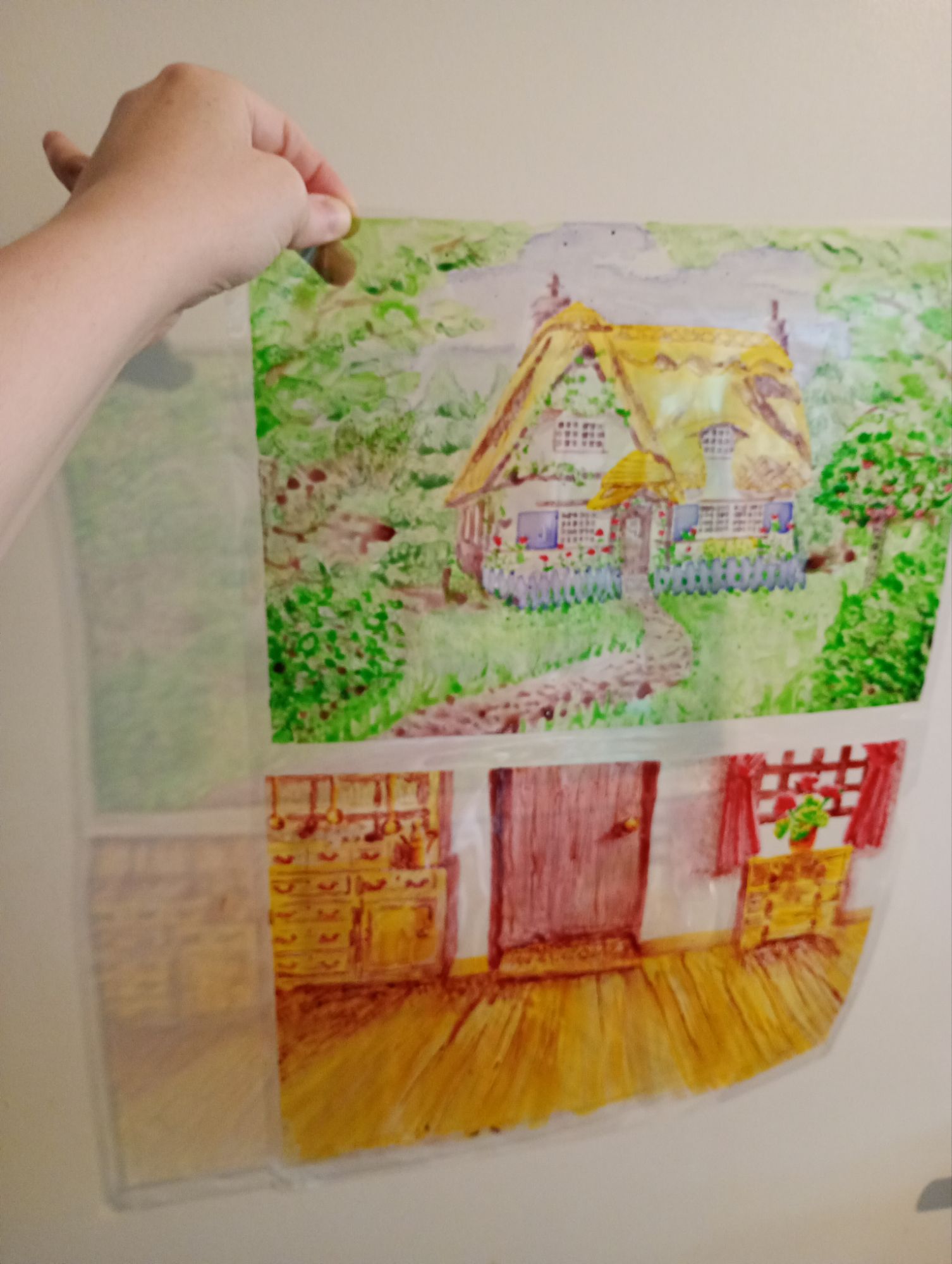
Then, I had a brainwave that I could try laminating the painted transparency so that the paint was encased and would be protected and not stick to the puppets.

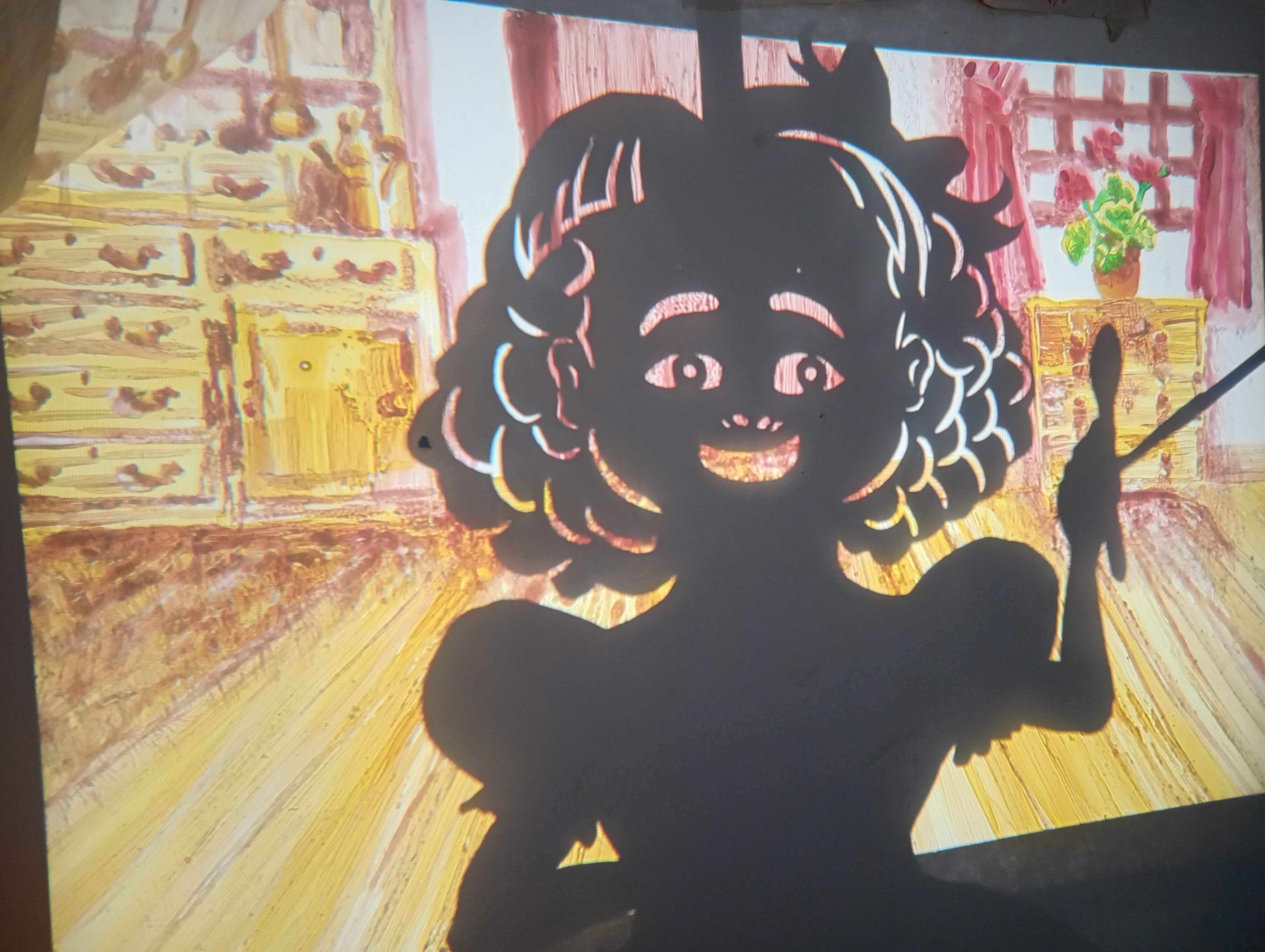
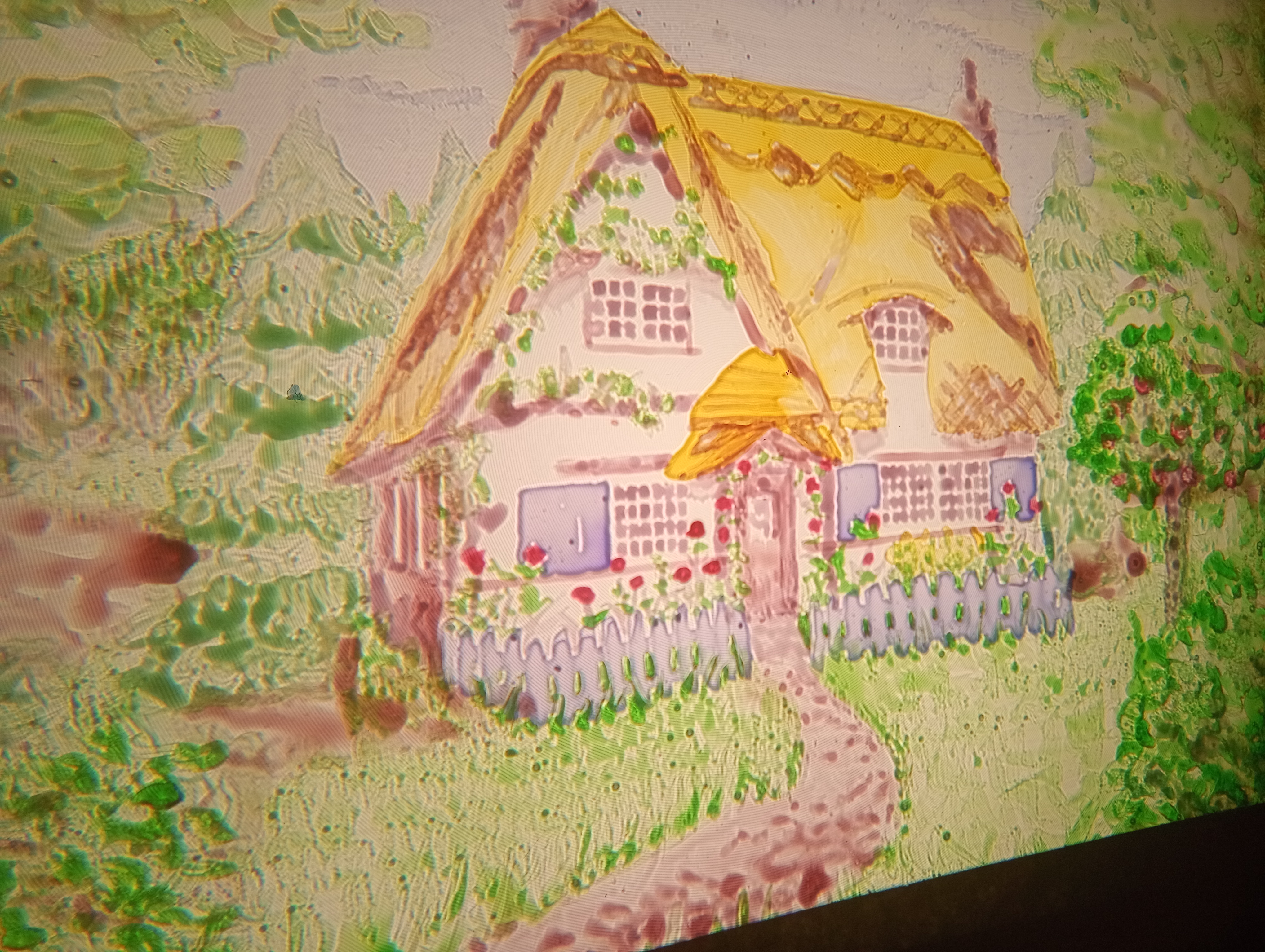
The photos above show what I’ve got so far. I tried them out on the overhead projector and found that they look fine as they are (I wasn’t sure if I’d need to go in with a black pen to do outlines but they seem fine as is).

I was reminded of the hand painted magic lantern slides from the National Science and Media museum in Bradford.  They, and some Indonesian shadow puppets and silhouette cutouts by Lotte Reiniger, are now on public display in the new “Sound & Vision” gallery. You can access my previous posts about Lotte Reiniger here: (Animation at National Media Museum, Bradford and Nice but Naughty?).

The magic lantern pre-dates photography and cinema though photography was used to produce lantern slides (which were then hand coloured later on). CLICK HERE for the Wikipedia entry and HERE for info on the museum collection.

While I was doing my shadow puppet workshop and performances for the museum’s family day it was brought to my attention that there would be a screening of Lotte Reiniger’s masterpiece “The Adventures of Prince Ahmed” and accompanying workshops on Saturday 25th July.

This is the oldest surviving full length animated feature film (pre-dating Disney’s “Snow White and the Seven Dwarfs” by 11 years) with a new original score by Chris Davies.

Chris was originally commissioned by the museum to create the score (which is part recorded and partly performed live) for the Bradford animation festival in 2014.  You can find out more by clicking HERE. Below is a video extract from this first performance:

So, I (obviously), made a point of going along and also had time to go round the Sound and Vision gallery in the morning with my kids.

For those who haven’t already seen it, below is a little tour of the new gallery by Al, from “Al & Kai’s Faboo News”:

The “Faboo News” patreon page has had an overhaul and you can now access lots of fun activities/resources for FREE, why not take a look by clicking HERE

Review – Manual Cinema’s “Ada/Ava”

Last week “Manual Cinema” (for whom I have ever increasing respect and admiration) decided to stream a video recording of their live theatre show “Ada/Ava” for free. I watched it through twice and was delighted to see that it included a little behind the scenes video at the end for the benefit of online viewers as a replacement for the usual live demonstration that they do for live audience members at their shows.

I will not explain the full modus operandi of the theatre company and this particular show, as the video above (which I found subsequently) says it all, really.

The breakthrough “aha” moment for me was discovering that they use multiple OHPs to achieve the cinematic “cut” effects live.

I was aware that it is possible to get a layering effect with multiple shadows by using more than one light source at the same time, but the idea of using more than one OHP to do this simply never occurred to me before.

I have also seen the use of live actors combined with shadow puppets before and shadow head pieces. This was a particularly good choice for this story because it meant that the facial features of the actors not only matched the puppet versions of the same character but that they could use non-identical actors to portray the identical twin sisters.

I liked the fact that nothing was done just for the sake of being clever – everything was done to serve the story arc. However, many clever effects were used for the right reasons (e.g. to create dream like or supernatural effects or to show the distorted reflections in the “Mirror Maze”). As it says in the video above a lot of the silhouettes and puppet mechanisms are very simple but are used well in combination with everything else to create powerful and rich story-telling.

I liked the blurring between the world of reality and the world of the supernatural/dream state and this is something that could be achieved very well through this medium. The way that the ordinary every day routine was set up so meticulously at the beginning of the story really pays dividends once everything starts to unravel for Ada. Supernatural effects need a contrast with ordinary reality to make them effective and the ordinary reality for the twins was set-up with wonderful care at the beginning (even if it was an unusual old-fashioned Gothic sort of existence as lighthouse keepers in an exposed and isolated location).

There was also carefully chosen use of colour in the show. Ada and Ava’s life in the lighthouse being largely monochrome and colour being used for the bright new goods at the “Boxmart” and for the carnival lights and backgrounds etc. The sky and seascapes/backgrounds also used colour whilst the puppets were kept as black silhouettes. They used their computer to print out photorealistic backgrounds on acetate for most of these.

I was also particularly impressed with the effects the created of the signs made from illuminated lights at the fairground. It strikes me as particularly clever to create lights using shadow puppets and I am almost 100% sure I know how they did it.

I was also very pleased that everything turned out right for Ada in the end. There was a point in the plot where the audience are left wondering if Ada is going to be tempted into suicide in order to re-join her sister. I am generally only a fan of horror/violence if it a prelude to a moral or a happy ending. What is the point of a story if not to give us an emotional lift and sense of resolution and satisfaction? The way we perceive reality is coloured by the stories we tell ourselves about it and if we constantly tell ourselves the world is a dark, dangerous and negative place then that is how everything will seem to us. I am glad to say that in this story she comes to terms with the death of her sister and is able to move on and be her individual self but also to remember and treasure her sister at the same time.

A big THANK-YOU from me (and my husband Tim Austin who also watched it) to “Manual Cinema” for their generosity in sharing this video with everyone for free and for sharing the techniques that they used. It has given us much food for thought as well as wonderful entertainment. What a wonderful set of talented folk! I don’t normally do stars with my reviews, but if I did, it would be 5 stars from me 😊👍✳✳✳✳✳.

It was also Manual Cinema that created the Candyman film trailer that gave us a lot of inspiration for our current online shadow puppet series that we are working on:

We are still working on a funding application for “The Secret Keeper” at present so work is paused on that for a while (as they do not fund work retrospectively). As soon as there are any developments on that I will let you all know 🤞.