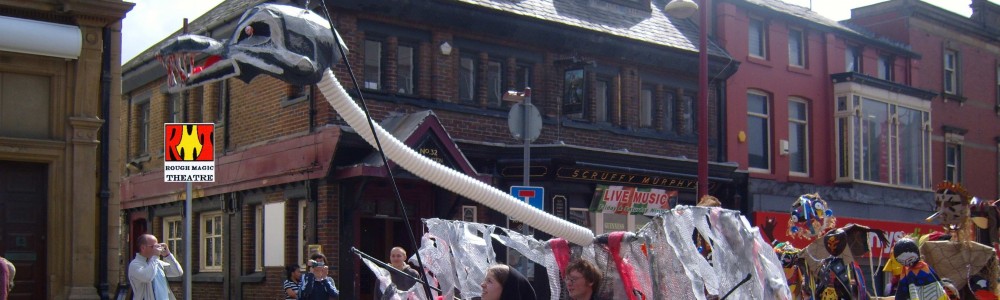
What Puppetry Can Do that Nothing Else Can

Today (21st of March) is World Puppetry Day. You can read more about the origin of the day and special events that are being organised for it on the Unima website HERE.

If you are new to the World of Puppetry you might wonder what puppetry is for, or why it matters. Why use a puppet when you could get an actor? A person has a much wider range of facial expression than a puppet and: as Gerry Anderson (of Thunderbirds fame) discovered when he moved from puppetry to live actors, you can just tell the actor to go somewhere and pick something up and they can do it with minimal technical difficulties. Gerry always disliked the way the puppets that were made for his shows walked and in order to get maximum realism had his characters seated or shot from the waist up wherever possible.

A relaxing interlude for International Rescue (The Classic Thunderbirds exhibition by “Supermarionation Recreations” at Stone Puppet Festival)

The problem with using Gerry Anderson as an example is that although he and Sylvia Anderson (who made a massive contribution to “Supermarionation“) did a fantastic job and produced amazing work they never really wanted to work with puppets. They used them as a stepping stone to get a foot in the door of the TV production world and Gerry’s aim was always to produce TV shows with people. Because of this, their shows kept leaning further and further towards realism and realism is not generally where puppetry shines.

One way that a puppet outshines a human actor is that however good an actor they are, they are still someone pretending to be someone else and there are many famous actors who basically play themselves in every role. This is fine if the character is like them but it often jolts you out of the story if you are comparing them to their performance/appearance in other films, TV or stage shows that you have seen. A puppet is designed to BE the character and there are no physical limitations to overcome, no make-up or prosthetics needed to alter the actor’s appearance because you can make them EXACTLY how you want the character to be. They don’t go home at the end of the day and back to their real life. The puppet always IS the character.

This is particularly useful for magical/fantasy/science-fiction stories as a puppet can be a dragon, a robot, can fly, can transform from one thing to another. Shadow puppets in particular can easily perform tricks such as shrinking, growing or disappearing altogether.
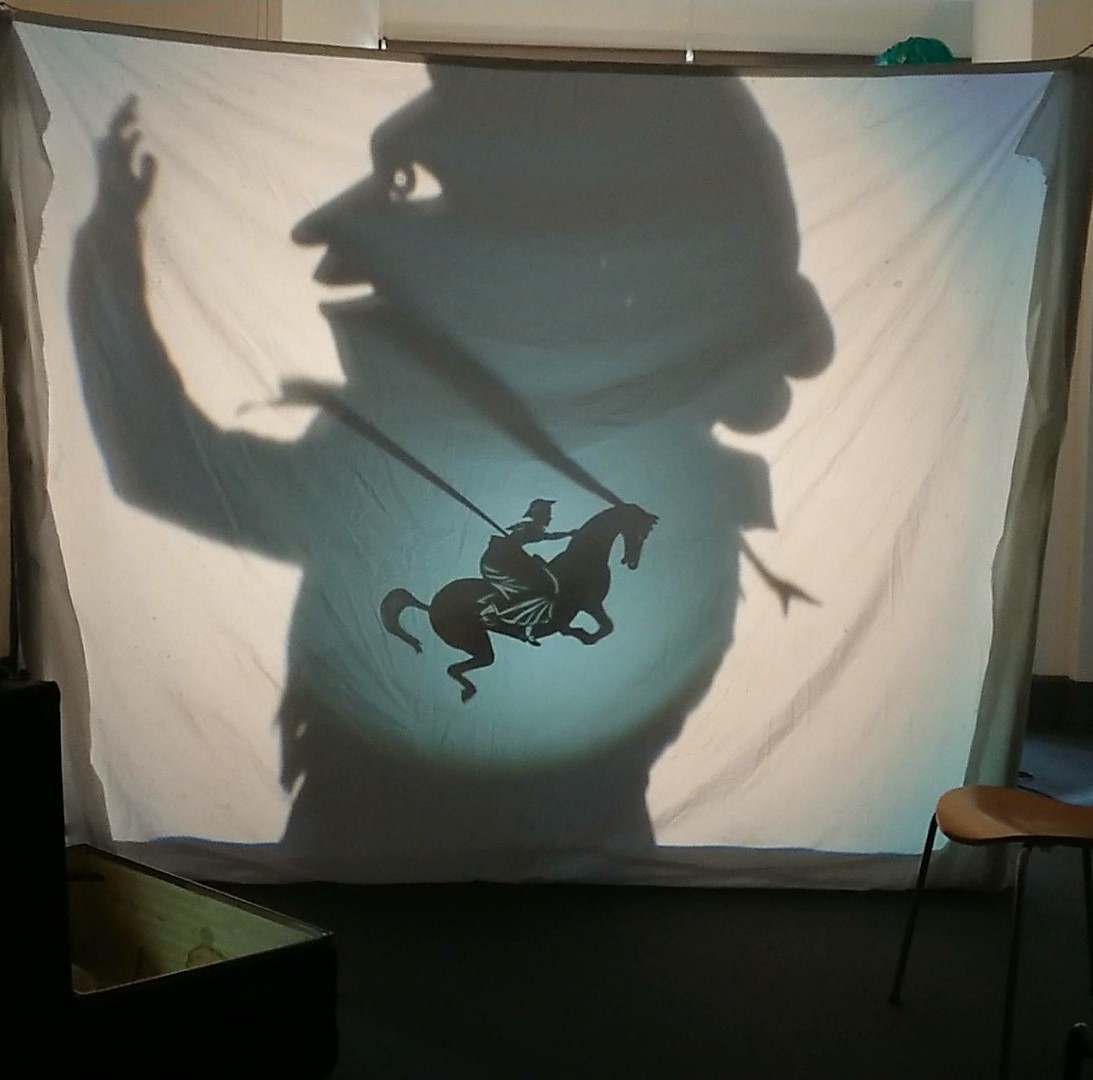
One of the reasons I love making puppet shows is that they combine so many different elements and skills. There is the art of designing and making the puppets which are often beautiful showpieces in themselves. There is the movement of the puppet which tells the audience all about the character. A villain might move in a slinky, sneaky way, silent and secretive. A hero might be more upright and move confidently and boldly through the space. A cowardly character would move with trembling and hesitation and be able to shrink down and cower away from perceived threats. They are fantastic aid to storytelling and can tell stories without words or in addition to words so that those who have a visual preference or are D/deaf can follow what is happening. The fact that they are puppets also allows people to project their own thoughts, feelings and emotions onto the characters and everyone will have their own individual experience of the same show. Puppets with carved wooden features that do not move are often perceived by audience members to change expression through the puppeteers skill, use of lighting and the audiences own imagination, (which is not to be underestimated).
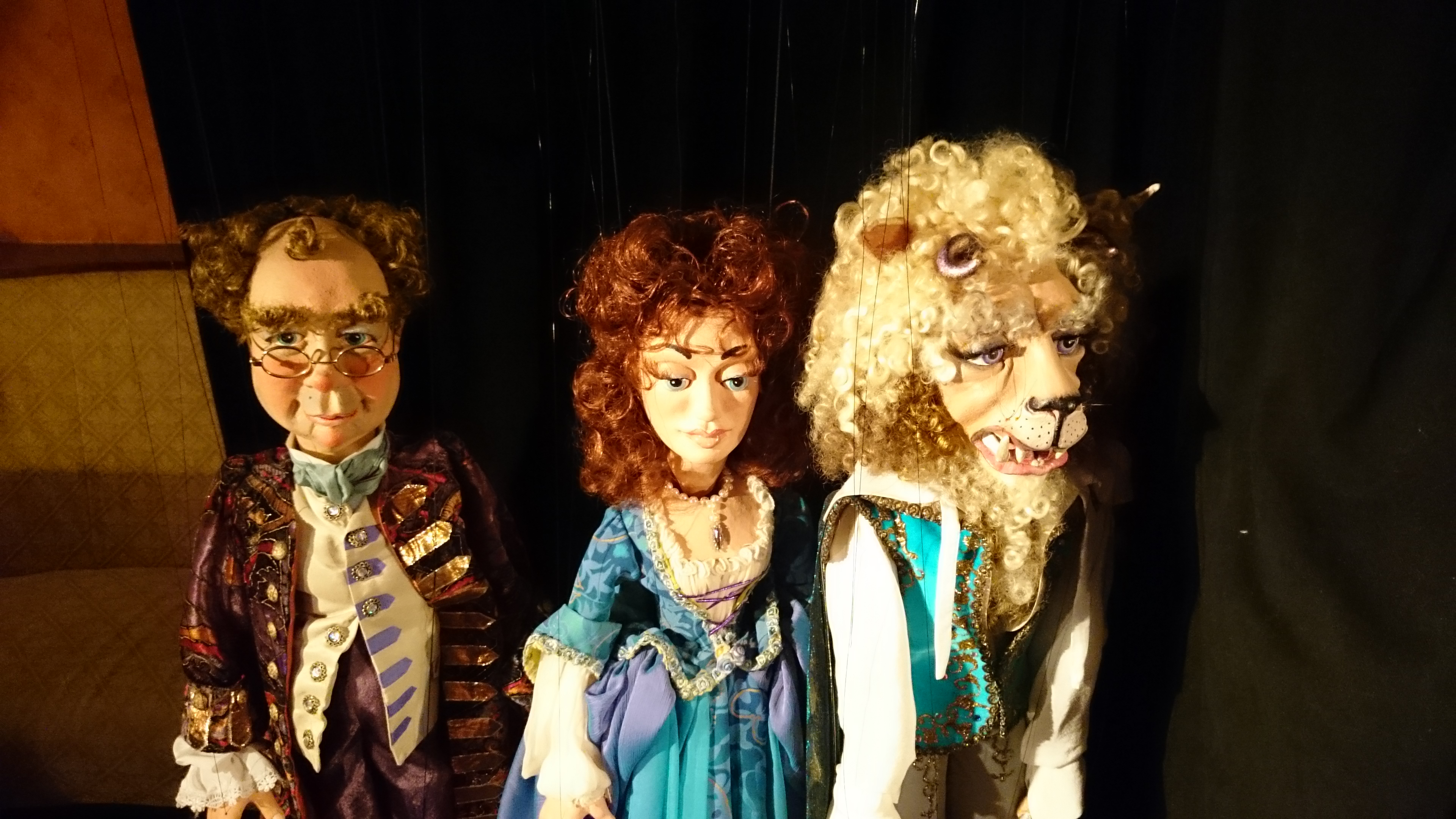
Marionettes from a production of “Beauty & the Beast” (Exhibited at Stone Puppet Festival)

Another reason I love the artform of puppetry is that anyone can make a puppet using cheap materials or even things that would otherwise be thrown away. The main limitation is your imagination and skill, (and skills can be learned and improved through doing and trying things out). A lot of my workshops making shadow puppets use cereal or pizza boxes as this is a perfect thickness to cut out and be sufficiently sturdy to work with. To make a show all you need is a puppet (or a hand if you want to do hand shadows) a light source and a screen (which could be a sheet pegged to a line) or a blank wall.
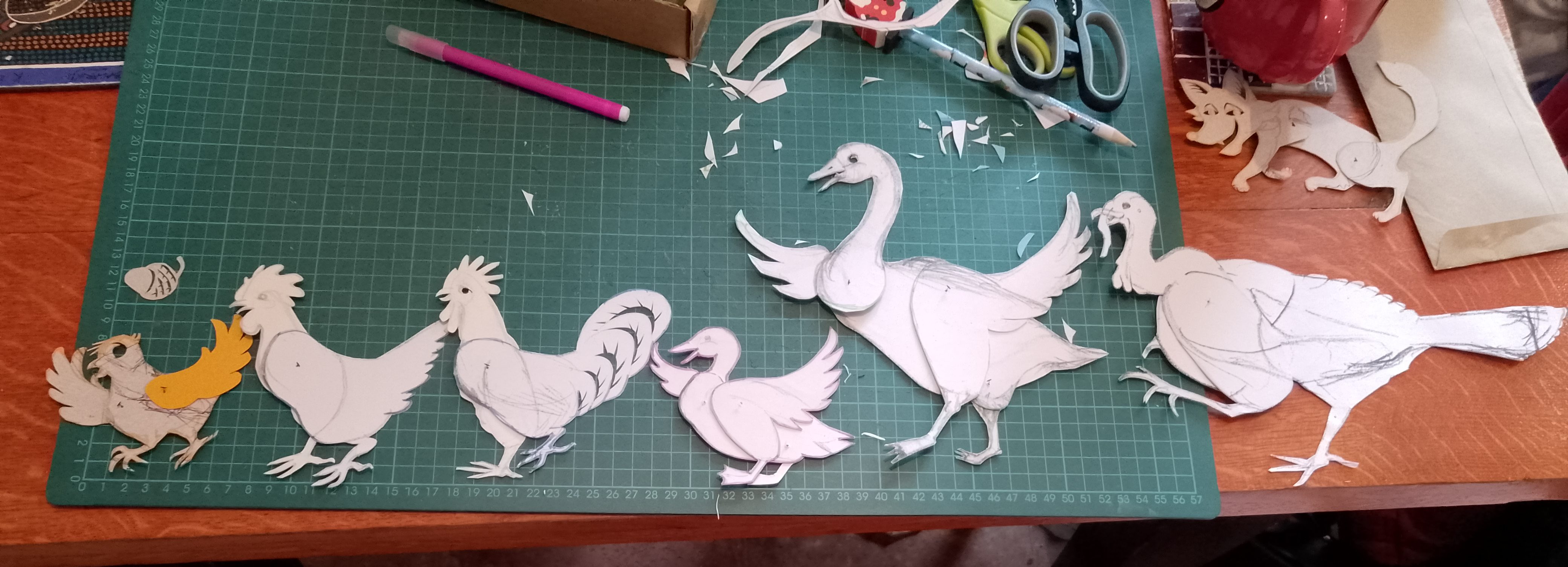
Puppetry can be less intimidating as an artform than some as anyone who has played with their toys at home and acted out different characters with them can bring a puppet to life. Obviously, specialised techniques and practice improve a performance but there is nothing wrong in simply enjoying playing with puppets and amusing yourself, your family and friends. Play, in itself, is hugely beneficial: educationally, emotionally and great to promote good mental health, confidence and creativity. And, lets not forget, creativity is beneficial not just of itself but is great for problem solving and helps with all subject areas in a curriculum and all kinds of careers in later life.
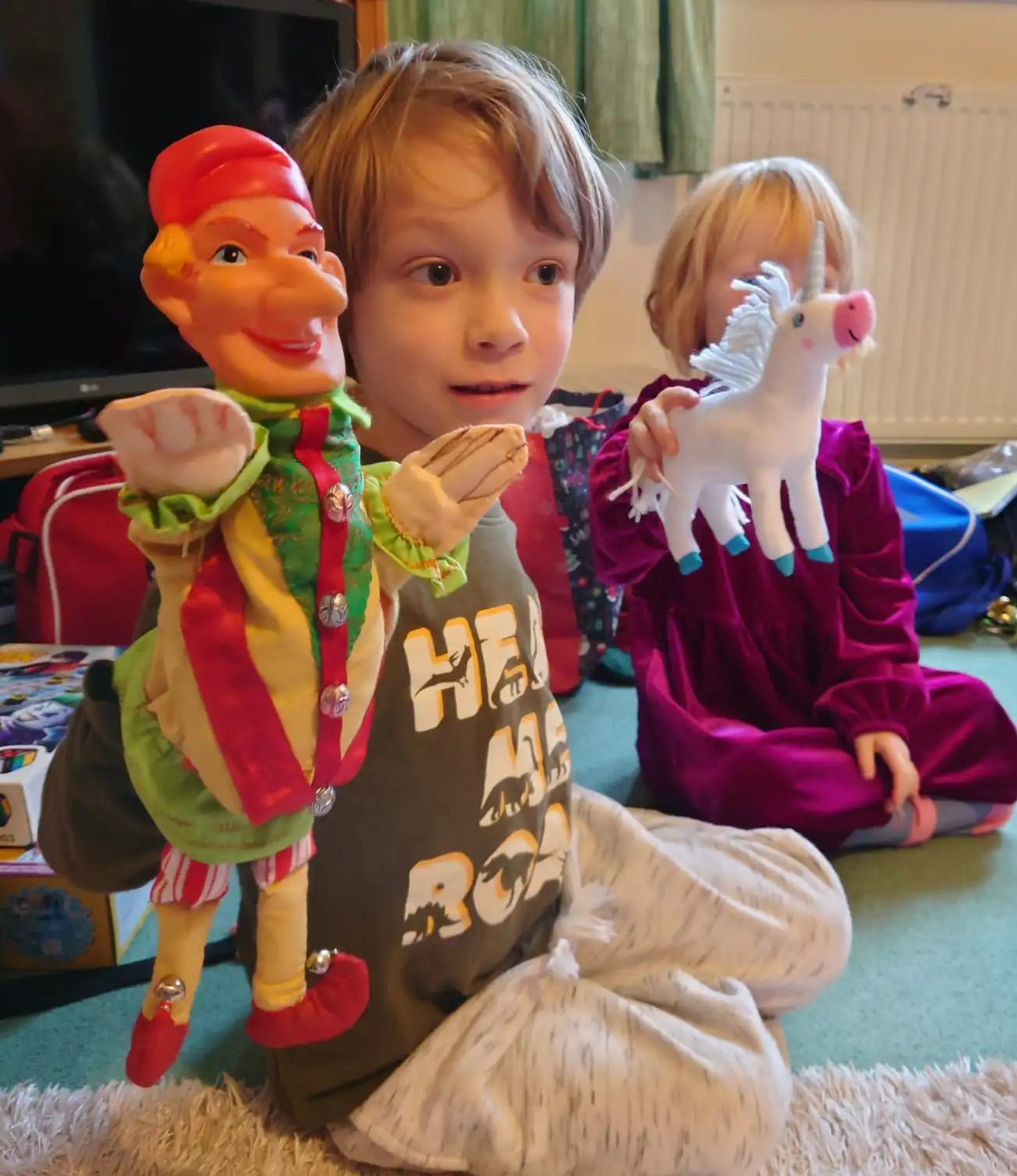
With so many councils downgrading or removing arts funding altogether and arts subjects and teachers disappearing from the curriculum at Primary, Secondary and Higher Education level an art form that is possible for people to have a go and create their own work themselves is increasingly important.

Puppetry is also able to give confidence and a voice to those who might otherwise be too shy to speak. A child can speak using the puppet’s voice without worrying about being judged and can even speak as the puppet without being seen themselves (if being looked at is a problem for them). For this reason puppetry is often very attractive for neurodiverse people and can also be used as an effective therapy tool in all sorts of settings.
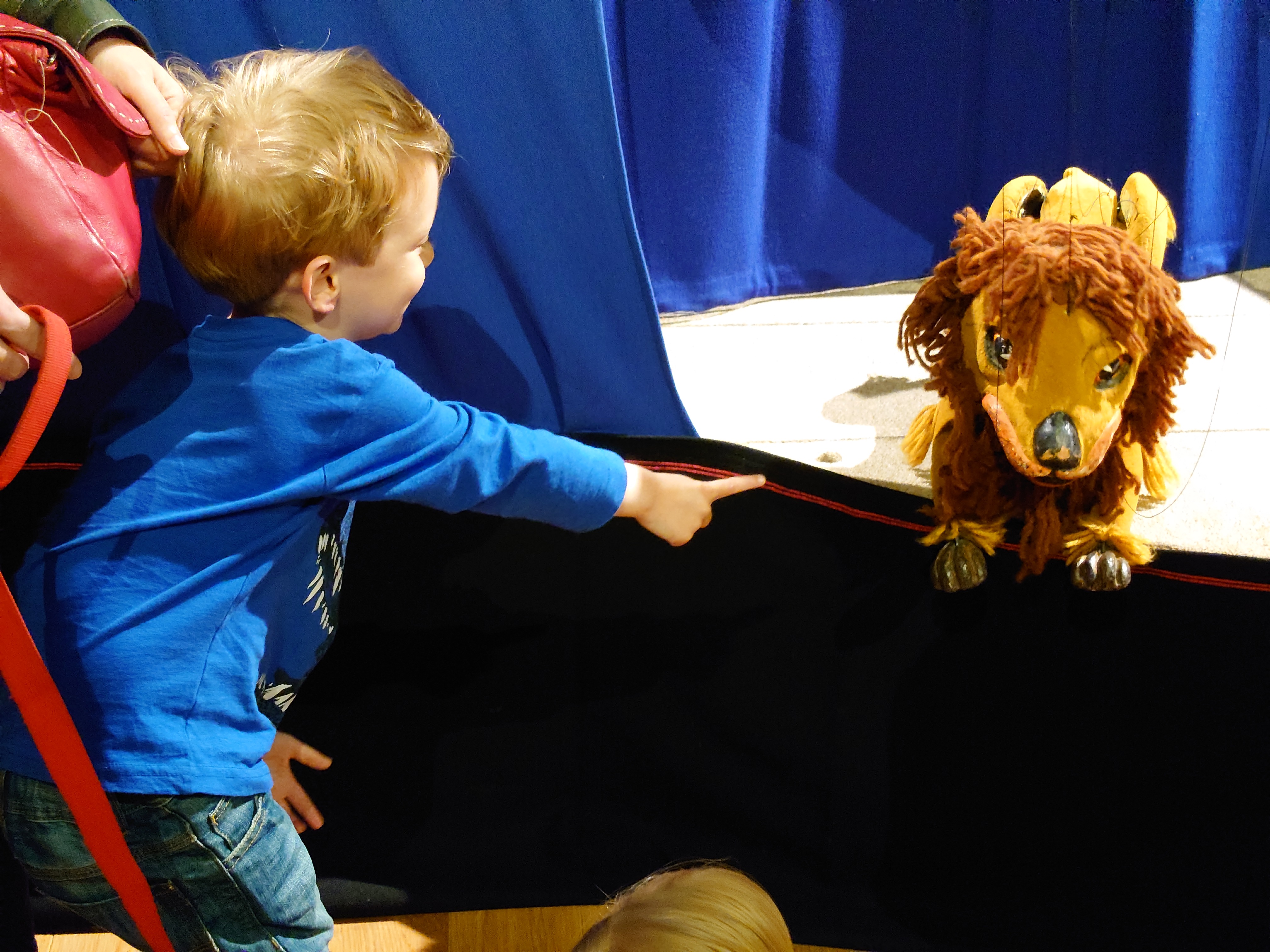
A Lion from the “DaSilva Marionette Circus Troupe” performed by Noisy Oyster

If you want to learn where to start or learn the best techniques then the British Puppet Guild is a very open and inclusive group full of people who are very willing to share their expertise and have all sorts of events both online and in person. You don’t have to be a professional to join and there are members of all ages and abilities so there is no worry about whether you are “good enough” to join, beginners are welcome. Members get an annual magazine put together by the membership called “The Puppet Master” full of colour photos, interesting articles and sometimes instructions to make theatres or projects.

PuppeteersUK have a directory of professional puppeteers with a wealth of expertise in different areas which you can access to find out what puppeteers are available in your area for shows, workshops and events.

BrUnima is the British arm of UNIMA which unites puppeteers and puppet makers from around the world and they are worth checking out too particularly if you interested in finding out about different puppetry traditions from around the world. BrUNIMA produce The Puppet Notebook annually which is full of in depth articles from practitioners and academics usually around a theme.

If anyone knows the makers/puppet companies who produced the Beauty & the Beast marionettes in the photos which are uncredited from Stone Puppet Festival, (I think they are from Ian Denny and Glen Holden) feel free to mention them in the comments 🙂

Thunderbirds are GO!!! – But are they as good as the original series?

Despite my initial suspicion, given the lack of puppets, the new reboot of Thunderbirds for ITV (Thunderbirds Are Go) has a lot of merit and is great fun to watch.

I tend to find in general that films and television that use CGI rather than puppetry are just not as effective.  You can always tell when something is CGI rather than animated or using live puppetry and it does tend to feel a bit cheap, fake and disappointing.  There are obviously exceptions.  The work of Pixar for example does not attempt to make CGI look naturalistic but instead uses caricatured visuals which are much more effective.

Puppets have a character and expression all of their own and unlike CGI where every action is programmed a puppeteer can be surprised by the things their puppet does.  A puppeteer does not impose a set of actions and movements upon the puppet, rather the puppeteer uses the natural movement and rhythm of the puppet as a physical object in real space, (with real gravity etc.) to create the character and these determine what movements the puppeteer has the puppet make.

A lot of directors/producers recognise the unique quality that physical models, practical effects, puppets, prosthetics and animatronics can give to a film and use these techniques in their work (often in combination with CGI as well).

Indeed the “Thunderbirds Are Go” series has tried to be very respectful to the love that people have for the original Thunderbirds and the old and new Thunderbirds share a great many common elements.  Not least of these is the decision to use model work and some physical effects in combination with the CGI characters.  These models have been made by Weta Workshops in New Zealand – the same team who created the truly stunning model work for Peter Jackson’s Lord of the Rings films, (the films which coincidentally brought the use of CGI in film forward in huge leaps and bounds).

I watched a “making of” documentary of the “Thunderbirds Are Go” series and was delighted to hear that Weta had been taking inspiration from the original Thunderbirds sets by incorporating everyday household objects (such as a lemon squeezer and part of a Dyson vacuum cleaner) into the sets and models.  I am a big fan of re-purposing everyday household objects and waste to create new and fabulous things.

I was also amazed to discover that they were able to engage the same voice actor from the original Thunderbirds to play the ever popular “Parker” (Lady Penelope’s chauffeur).

The things we all loved about the original Thunderbirds – exciting plots, great music, suspense, explosions, ingenious machines, humour and the elaborate and fantastic ways the Tracy brothers get into their uniforms and vehicles are all still there in the new series.  Some of the plots are better than others but in the main – highly entertaining.

So what are the differences?  Gerry Anderson tried very hard to keep the “puppetness” of the characters to a minimum.  They wanted the strings to be as little noticed as possible and, to avoid the funny, unnatural walk the characters had being on view, the plots had the characters sitting down a lot or used close ups of the faces or top halves of the characters.  The puppets had sophisticated mouth moving mechanisms and features that were very realistic.  Captain Scarlet continued this quest for realism and away from caricature by reducing the size of the heads of the puppets to be closer to the proportions of a real human being.

I am not by any means criticising the puppeteering skills of the Thunderbirds team as the problems with the puppets’ gait were not necessarily their fault.  The use of long strings kept the puppeteers out of view but also diminished control compared to a short stringed marionette.  To minimise the visibility of the strings, a lesser number than is usual were used which made natural movement difficult too.  I understand there were also difficulties with weighting the puppets correctly to produce a natural walk due to the materials used.  For those who are interested – you can find out more about this in John M Blundall’s article page 19 of volume 16, Number 7 Autumn 2009 issue of The Puppet Master (The Journal of the British Puppet and Model Theatre Guild).

Despite these difficulties audiences found the puppet performances charming, fascinating and no bar at all to whole-hearted immersion in the stories that the puppets were telling.  I believe young children who watch marionette shows (even live where the strings are more visible) do not even notice the strings, as the life of the puppet and the story are all absorbing.  I heard a great many people, including Paul O’ Grady on his Radio 2 show, bemoaning the lack of puppets in the new series and saying “it’s not the same without the puppet is it?”.

While the puppets managed to tell their stories perfectly well, the CGI characters (despite lacking the charm of the puppets) are able to do things (or be seen doing things) which the puppets could not.  The sequences with Parker as the “Grey Ninja” in one of the episodes of Thunderbirds Are Go, have him leaping and sneaking about in a way the puppet Parker never could.  These movements may not have been awfully realistic for a man his age but that made it funny!

Lady Penelope’s radically altered appearance is something I find difficult to forgive and of all the CGI characters her appearance looks the most fake.  Her hair (and indeed the hair of all the characters looks solid like it has been carved out of something) and her face has none of the effortless cool and sophistication of the original Lady P. (who I’m told was modelled on the appearance of Sylvia Anderson).  The addition of a pug to her entourage is however, perfectly acceptable and it is very cute.  The new look of the pink Rolls Royce is also acceptable and pretty damn snazzy.

The look of the faces of the Tracy Brothers and the other characters is meant to be a nod to the original “eggshell” finish of the puppet faces but I can’t help wondering if this just makes the CGI look cheap and shoddy, as it looks like a mistake.  The solid-look hair would also make the characters quicker and easier to animate.  On the other hand – I do like the fact that the characters (apart from Lady P.) are very similar and recognisable from the original puppets and I have already admitted that I prefer my CGI stylised rather than realistic.

The greatly increased role of Grandma Tracy in the new series is a good change too as she adds a lot of extra humour and of course it is always good to address the male/female balance a bit.

The new series has also tackled some of the less PC slightly cringe-worthy elements of the original series (though it was of its time so some slack can be cut, I feel).  I refer to the fact that in the original series the Hood (the bad guy) has an east asian appearance and the Tracy family servants are also East Asian (so either sub-ordinate or evil hmmm!).

In the new series the Hood does not look or sound Asian (he sounds English) and Brains, who is a positive character possessing great intelligence and a member of the International Rescue team, has become an Asian character and is voiced by a British Asian actor.  It makes sense to me that “International Rescue” has taken this opportunity to become a bit more International than they were before (they only had Americans and English people originally).

I am, however, greatly disappointed that the Hood has not the same level of cheesy villain-ness as before, (I would like to see more maniacal laughing and I miss his glowing mesmeric eyes trick).

Despite the shortened running time (another new series drawback) the character interactions are given more prominence and subtlety and in many episodes are more important than the rescue scenarios.

So which is best?  I am going to sit on the fence and say I like them both.  There is nothing to stop Thunderbirds fans old & new from enjoying the original series in all its Supermarionated glory and then tuning in to find out what the latest emergency facing International Rescue is on ITV at the weekend.

At Stone Puppet Festival on the 8th and 9th of August 2015 there will be a free interactive exhibition of “classic” Thunderbirds Marionettes by Supermarionation Recreations.  A great chance to discover the puppets the new series is based on for young viewers and a nostalgic stroll down memory lane for those of us who remember and love the original Thunderbirds series.  CLICK HERE to find out more and don’t forget Stone Festival’s Crowd Funding campaign still needs your support.  Tell all your friends and pledge some money if you can please 🙂  We will be performing our Alice in Wonderland show at the festival, CLICK HERE for more info.

Meanwhile please vote in my poll below 🙂