Battle of the Pinocchios, Guillermo del Toro v Disney v Upfront Puppet Theatre (This review contains spoilers)

I was unsurprised to see that Del Toro had chosen to marry up the story of Pinocchio with Mary Shelley’s Frankenstein as the story type is the same (an artificial, man-made being is brought to life and explores the world as an innocent child would, but grows and changes through various negative and positive encounters).

The main difference is that in the original Pinocchio story Geppetto longs for a child and is glad when his puppet comes to life by a miracle. In Del Toro’s version Pinocchio is created in a drunken grief fuelled frenzy and is imperfectly made and unfinished. The addition of the lightning storm makes the Frankenstein parallel very clear and Frankenstein’s monster was also made in a hurried frenzy by Frankenstein who is only thinking of making his experiment succeed and doesn’t think about making his creation aesthetically pleasing or how others will react to him if his experiment succeeds.

The initial sequence when Pinocchio first comes to life shows Pinocchio’s limbs bending in the wrong direction and looking almost like a spider and is undoubtedly how a puppet would look if brought to life and unsure how to walk and move about. This sequence where Pinocchio trashes the whole room and drops and smashes every breakable item and narrowly avoids hitting Geppetto with various sharp implements is not one that I would think is very child-friendly (though I haven’t watched it with any children yet) but at the same time it is mellowed somewhat by the fact that it is obviously an animated film full of fabricated puppets (including Geppetto) and also by the song Pinocchio sings as he explores the space and its objects. He may be seen as a monstrous unnatural being at this point by Geppetto but the chaotic, destructive rampage that Pinocchio embarks on has the chaotic innocence of a toddler exploring.

Del Toro’s Geppetto is grieving for a lost son who dies a violent and senseless death when a returning enemy bomber chooses to lighten their load by disposing of left-over bombs over a small village that was not a target. He wishes his boy alive again when he carves Pinocchio from the wood of a tree that grows on his son’s grave, (again echoes of Gothic horror rather than family movie here). Once Pinocchio appears in answer to his wish, however, Pinocchio is not just told off for being a bad disobedient boy like in the original story he is additionally compared to and in the shadow of the memory of Geppetto’s lost son who was a good obedient boy.

In the original Disney film (1940) Pinocchio is repeatedly naughty (disobedient) and only becomes a real flesh and blood boy by learning to behave himself and be a good/obedient boy, (in other words the story is a morality story to teach children to be obedient to their parents). Del Toro transports Pinocchio to Fascist Italy and WWII. The authority figures in the film include Geppetto, a Catholic Priest (who is in sympathy with the Fascists), Count Volpe (a circus showman), Podesta (a local fascist representative) and Benito Mussolini. Pinocchio defies all of these and is an untameable wild spirit but at the same time, he craves the love and acceptance of his father Geppetto and the love of others around him. He begins to make decisions not just because they are easy or pleasant, but because he thinks they will help his father and his friends. He does not transform into a flesh and blood boy at the end as a reward for being good but instead sacrifices himself and his status as an immortal being and gains the love and acceptance of his father for who he is rather than an imperfect imitation of a dead boy.

Pinocchio chooses to be “a real boy” by becoming mortal after he is warned by death that immortality is no good if the people you love all die and leave you behind and that life has more meaning because it is brief. Del Toro chooses, however to end the movie by showing Pinocchio visiting the graves of his father and friends that he has outlived, (although he does imply that Pinocchio will die eventually). I don’t think he intended this to be the bleak ending that it might seem, however. Pinocchio does not seem distressed and the graves are in a beautiful location. There is also an extra humorous sequence with Sebastian the cricket playing cards with the undead bunnies after his death to lighten the mood somewhat. I understand that rabbits can symbolise life, death and rebirth so it makes sense that rabbits were chosen as Pinocchio’s corpse bearers after his multiple deaths and perhaps implies that Sebastian and the others will also go on to some form of rebirth.

After watching the film, I thought I would look up some of the reviews and background to the making of the film in the hopes of making a blog post out of it and discovered references to Disney’s live action re-make of their original 2-D animated Pinocchio film. I found that while Del Toro’s Pinocchio had excellent reviews on Rotten Tomatoes, this Disney remake was almost universally panned. One review simply said “Just watch the original” and I also discovered that Tom Hanks as Geppetto received a Golden Raspberry award for his part in the film.

I like Tom Hanks, he is a great actor and a small number of audience reviews said that they really liked the film and that it was just the same as the original but with added visual pizzazz. I thought it was worth giving it a watch for comparison as Tim has a Disney + subscription at the moment.

We tried to watch it but only got about 23 minutes in before we had to give up because we just couldn’t stand it any more.

It was a combo of CGI and live action rather than stop motion, but that was not the problem. The script and the direction were a killer combo of mind numbing dullness and cringeworthy awfulness. I could cope with boring, but the rhymes of the blue fairy struck me as significantly worse than an amateur panto script.

Like Del Toro, Disney had decided to ring the changes from the original and had the memory of a dead son as inspiration for Geppetto’s “wish upon a star” but the script was dragging exposition of the worst kind and the way they laboured the point of why his name was “Pinocchio” and then repeated again just in case you missed the long winded explanation the first time was excruciating.

The “Wood Sprite” in Del Toro’s film glosses over the naming in a simple elegant way that doesn’t insult the audience’s intelligence.

I cannot speak to whether the rest of the film improves from this point onwards, so feel free to give it a try if you like. A look at the film’s Wikipedia entry seems to suggest that like so many things, this film was a victim of the pandemic. There were lots of switch arounds of people working on the film and that has left it a hodge podge awful mess, lacking clear vision or cohesiveness.

As to how these two films compare with Upfront’s puppetry version which did a cut down but very faithful adaptation of the original story (from what I know of it), I would say that live puppetry beats cutting edge stop motion and live actors or CGI because of the immediacy of the performance and the direct connection between the puppeteers and the audience.

It may seem like sacrilege to say it but although Guillermo del Toro’s masterpiece is undoubtedly an animated triumph and definitely superior to the live action Disney film, it seemed too realistic and too perfect and too similar to a live action or CGI film because all the amazing technological tweaks got it to seem so smooth and life-like.

I am a huge fan of stop motion animation, but I like to see how it works. The jerkiness of the creatures in the Sinbad Movies by Ray Harryhausen is what makes them magical to me. Although Del Toro says this is the reason he wanted to use stop motion, (because of the imperfections and being able to see that everything has been physically made out of real things) I am not convinced this comes across. After getting over the stylisation of the figures my brain just started to tell me that these were people and that it was really happening. Pinocchio did, however, seem like a puppet because of the way he looked, (half formed, unpainted, spindly un-natural limbs, round head and long pointy nose). On the other hand Del Toro said that he wanted Pinocchio to look like a puppet and behave like a human being while the other characters were meant to look more life like but behave like puppets, so if that was what he was aiming for then I guess he achieved it and to have them as actors wouldn’t have achieved the parallel he was trying to make.

Although the action, (particularly in the scenes where Pinocchio is made) is very dramatic and the historical setting is very compelling, I didn’t feel awed or swept away by the film. I think a big part of the reason for this was the music. I sadly felt that the music let it down. I understand Del Toro didn’t want it to be like a conventional musical and that he didn’t want it to be like: “and now we’re going to sing a song about how we’re feeling!” (cue twinkle on shiny, shiny teeth). However there are plenty of serious adult films that are enhanced and uplifted by amazing music and this film deserved something another level up dramatically and emotionally. I did watch the film while in bed with Covid and I wondered if this affected my perception and made it seem less exciting perhaps, but when I watched it again with my husband Tim he agreed that the music wasn’t great.

My favourite characters in the film were Spazzatura and Count Volpe. Spazzatura’s character isn’t in the original story (I suppose you could say he is a substitute for the cat) but he is a very dynamic character on all levels from the way he moves to the story arc and progression he makes through the story. I also loved the whimsical device that Spazzatura could make the puppets speak but could only communicate through sign language when not puppeteering. Count Volpe combines the characters of the fox, the puppet master Mangiafuoco and the circus ringmaster. He is quite over the top and theatrical in terms of his appearance and behaviour, (but that is quite to be expected from a showman) and I have to say that I enjoy my villains arch rather than multi-faceted and misunderstood. It was extremely satisfying when Spazzatura turns on him and causes his downfall.

To conclude:

I have found the process of writing this review very interesting and illuminating and have learned many new things that I did not know before. It seems like the story of Pinocchio is a very powerful one which has been adapted and remade again and again according to what the author/creator/adaptor wants to say. I will definitely try to get round to reading the original book “The Adventures of Pinocchio” by Carlo Collodi myself at some point. Who knows? Maybe we will make our own Rough Magic Theatre version some day.

For those who haven’t seen it, here is a puppet film called “The Ribs & Terror” by Patrick Sims that fuses the stories of Pinocchio and Moby Dick. This was shown as part of London International Mime Festival and is another example of the story inspiring new and fascinating work:
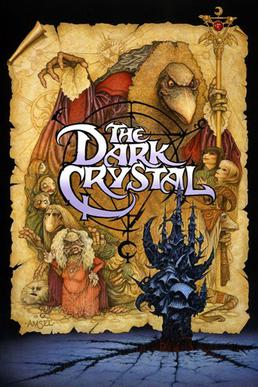
“The Dark Crystal Age of Resistance” v “The Dark Crystal” Movie (1982)

The Dark Crystal (1982) movie was one of the formative puppetry experiences of my youth. As I was born in 1982 I did not get to experience it at the cinema but rather watched it on the television in later years.

Sadly I do not remember exactly how old I was when I first saw it but, at a guess, I would say around 7 years old.

I remember it was frightening, or rather, had frightening bits but I was not distressed by it in the same way I had been by Moley in the Wild Wood (in Wind in the Willows by Cosgrove Hall). I used to make my Mum fast forward that bit on the video when I was 3 or 4 years old.

I think the worst bits were the collapsing face of the old emperor and the draining of the essence of the podling and then Kira, (though she did escape). The little detail of the tiny Podling child with her little doll when the Garthim raid the Podling village is also moving, (but I think adult parent of 2 small children me picked up on that more than child me did). However my main feelings about the film were that it was an exciting magical world. I did not even think of it as puppetry. The characters and the story were real creatures from another world that we just happened to have a window inside. I think I felt the same way about the characters from the Cosgrove Hall Wind in the Willows. As stop motion models/puppets everything was really real and was actually occupying real space rather than being a bunch of pixels in a computer.

I also found the Skeksis amusing rather than scary through much of the film. The disgusting way that they eat is so wonderfully tactile and filled me with the same childish glee that one gets from a Roald Dahl book such as “The Twits” or “George’s Marvellous Medicine”. The Chamberlain and his constant repetitious “whining” “mmmMMMMMmmm” was one of my particular, favourite bits of the film.

Re-watching the film with adult (and puppeteer’s) eyes sadly involves my analytical brain popping into gear. I can see the traditional puppetry style of the Jim Henson company in the way the Podlings and some of the other puppets move (the same style that we see animating Muppets and characters from Sesame Street). I was also a big fan of Sesame street growing up. I was too young for the Muppet Show and again, at the time did not think of the characters as puppets, (they were real).

I can also clearly see the multiple legs of the Garthim masking the real legs of the puppeteers (because I am looking for them) and that the Land-striders are the same shape as a person with stilts on arms and legs (because that’s what they are). What I am not sure about is whether I notice this because I am a puppeteer and puppet maker or because I am now an adult.

The Dark Crystal Age of Resistance has modern technology to help make the world as real as possible for an adult audience (they assume that fans of the original will be watching the prequel and are therefore now adults). In theory (as with the original) it is supposed to be for a family audience, but if so I would say it is definitely more suitable for older children. They have used green screen technology to remove puppeteers from shots and CGI to remove visible puppet rods. They have also used CGI for various special effects, backgrounds and the creatures that are in the place of wheels in the Skeksis’ carriages. From my research I have discovered that Jim Henson was not entirely happy with the puppet Gelfling as major protagonists as they did not have a lot of expression due to the small size of the heads and this is the reason they used human actors in the subsequent Froud/Henson collaboration film “Labyrinth“.

The Gelfling head animatronics in AOR is an improvement on the original heads with movable eyebrows allowing for a range of expressions though the jaw/mouth is rigid and simply opens and closes. The heads have also been augmented with CGI for certain shots (adding in eye blinks etc.).

The Director says that his aim was to make people forget that they are watching puppets and I’d say that the Gelflings and Podlings are the most problematic when it comes to that, (the Podlings are definitely a bit “Muppety” but very fun to watch). On my first watch through of the series (I binge watched it) I definitely found the rigid mouths of the Gelfling puppets a little off putting and found the expressions they were capable of a bit limited at first, but as the story progressed I found I became more absorbed by the story and less conscious of the Gelfling puppets’ limitations. They are undoubtedly beautiful puppets and I found Deet the most engaging of the main, Gelfling, characters. Her colouring (particularly her lustrous amber eyes) is very beautiful and she has a wistful, poignant expression that fits with the character’s eventual tragic ending (I say “ending” as with the series being cancelled we are sadly never going to find out what eventually happens to Deet).

On subsequent re-watchings of the series, I found, (as I often do) that as I already knew what was going to happen in the story, that my brain, (once again) started to focus on how everything was done technically.

I loved the very knowing and amusing reference to the artform of puppetry in the “puppet show within a puppet show” episode. The miniature puppets were wonderful and there was no pretence that these were anything other than puppets telling a story. The Dark Crystal film was criticised by some for not having enough humour in it (hence the change of tack in “Labyrinth”) but this episode of AOR was packed with humour from the very eccentric “Heretic” and “The Wanderer” and the interplay between the two.

I have read that the decline in popularity of the Bunraku theatre in Japan was possibly due to the fact that the puppets were too realistic and that once a puppet reaches a certain level of realism then it prompts the question: Why use puppets at all when an actor can portray so much more expression? The obvious answer to this in relation to the puppet Gelfling is that they are not human, merely human-like. I don’t know how much better a human with make-up/prosthetics would look compared to a realistic puppet, but I suppose the obvious comparison here would be Peter Jackson’s “Lord of the Rings” films. The Hobbits and Elves are wonderfully expressive because they are human actors and of course they pioneered the motion capture suit technology for the character of Gollum, (which one could argue is another form of puppetry).

However, I have seen the screen test footage that “The Jim Henson Company” created using a puppet Skeksis and a CGI Gelfling and even though (in my opinion) the Gelfling was a bit basic CGI wise compared to Gollum, the Skeksis and Gelfling do not match up together in terms of the way real objects catch the light etc. The puppet Skeksis in my opinion would not be better as human actors because they are not human-like and, therefore, they play to the strengths of the puppet; which is to do things that a human actor cannot do and to be things that human actors cannot be. There is no room for improvement with the Skeksis in terms of their appearance or performance in my opinion. They recreated the brilliance of the Skeksis in the original film and gave us more of what we liked in the first place and developed it and took it further, with a little CGI augmentation here and there (tongue movements for example).

The combination of Warwick Brownlow-Pike as puppeteer and Simon Pegg as the voice actor did a fantastic job of bringing the character I loved so much from the original film back to life and recreating and building on that original performance by Frank Oz and Barry Dennen. I would say that Warwick should take the greater credit for the acting performance of The Chamberlain when you consider that the voice-actors were matching their performance to the visual performance that the puppeteers had already created.

So if we agree that the Skeksis need no improvement and that they don’t match visually with CGI Gelfling then we are back to the decision to make the Gelfling puppets with little “pops” of CGI like the AOR did in fact use.

I think the problem is that the quality and realism of everything in the series is so high (with nearly everything physically there and lovingly handcrafted by experts at the top of their game) that very small flaws stick out rather more than they would otherwise do.

This series is, and will remain, an example of a crowning achievement of what is possible with puppetry; breaking new ground and inventing new ways of doing puppetry for TV that have simply never been done before. The puppets have been pushed to the absolute limits of what is possible and the Director, Louis Leterrier, pioneered the use of multiple hand held steady-cams to shoot the puppets which particularly pays off in the epic sequence where Rian is rescued from The Chamberlain’s carriage.

Performers of TV/film puppetry are used to being in complete control of what the camera sees by using monitors to view their performance as they do it. But, obviously with this approach (even with a split screen monitor) the puppeteer is not in quite so much control of the shots and I imagine they would have to approach the performance more like a human actor would. Leterrier directed all of the 10 one hour long episodes (a huge commitment which gives the series a unified overall vision) and he brought his experience of directing action fantasy films such as the 2008 The Incredible Hulk film to the project.

This is such a rich source of material to discuss one could write whole books about it (and indeed many people have). I am aware that I have only covered a fraction of what there is to talk about with both the original film and the Netflix series, (including the contentious issue of the cancellation of the series) but I have to draw a line somewhere.

To those at Netflix who think that the series is too expensive to make versus the amount of new subscribers they gained who wanted to watch this series; I would say that I would recommend anybody to subscribe to Netflix* just to get to watch this show (if you haven’t already seen it). If you haven’t already seen the original 1982 film or want to re-watch it; you can’t get this on Netflix. I downloaded the film via *YouTube Movies but perhaps it is available from other places too? Please mention in the comments section if you know of other places you can get hold of the film.

On a non-puppetry note if you are a similar age to me and remember “She-Ra” and “He-man” from your youth with affection there is an original Netflix series “She-Ra and the Princesses of Power” (which is a Manga style animation). It is aimed at people of our age who remember the series from our youth and the characters/plots/writing are sophisticated with lots of emotional depth. It is, in short, immensely superior to the original which was created solely to sell toys. So if you do decide to subscribe to Netflix I would recommend this as well (I have also enjoyed/am enjoying their series of “A Series of Unfortunate Events” and “Dirk Gently’s Holistic Detective agency”).

I welcome comments and would be particularly interested to hear from anyone who was involved in the making of “The Dark Crystal” or “The Dark Crystal Age of Resistance”. 🙂

*Please note I have not been paid anything by Netflix or Youtube to mention them and am wholly impartial.